


Understanding Child Support Basics
Calculating child support is a crucial aspect of family law, ensuring that children receive adequate financial support from both parents following separation or divorce. The process involves a careful evaluation of each parent’s income, allowable expenses, and specific circumstances that might warrant deviations from standard guidelines. This comprehensive guide aims to provide a thorough understanding of the key components involved in child support calculations, including income assessment, expense considerations, and the factors that can lead to adjustments in the final support amount. Navigating this process effectively requires a clear understanding of the applicable laws and guidelines, which vary by jurisdiction, and an ability to present accurate and relevant financial information. Calculating fair child support

Determining Gross Income
The first step in calculating child support is determining each parent’s gross income. This generally includes all sources of income, such as wages, salaries, commissions, bonuses, self-employment income, rental income, and investment income. It’s important to accurately report all income sources, as intentionally underreporting income can lead to legal consequences. Courts typically require documentation such as pay stubs, tax returns, and bank statements to verify income. For self-employed individuals, calculating gross income can be more complex, often requiring the deduction of ordinary and necessary business expenses from gross receipts. However, not all business expenses are deductible for child support purposes, so it’s essential to consult with a legal professional or forensic accountant to ensure accurate calculation. Imputed income may also be considered if a parent is voluntarily unemployed or underemployed. In such cases, the court may estimate the income the parent could reasonably earn based on their education, skills, and work history.


Allowable Deductions and Adjustments
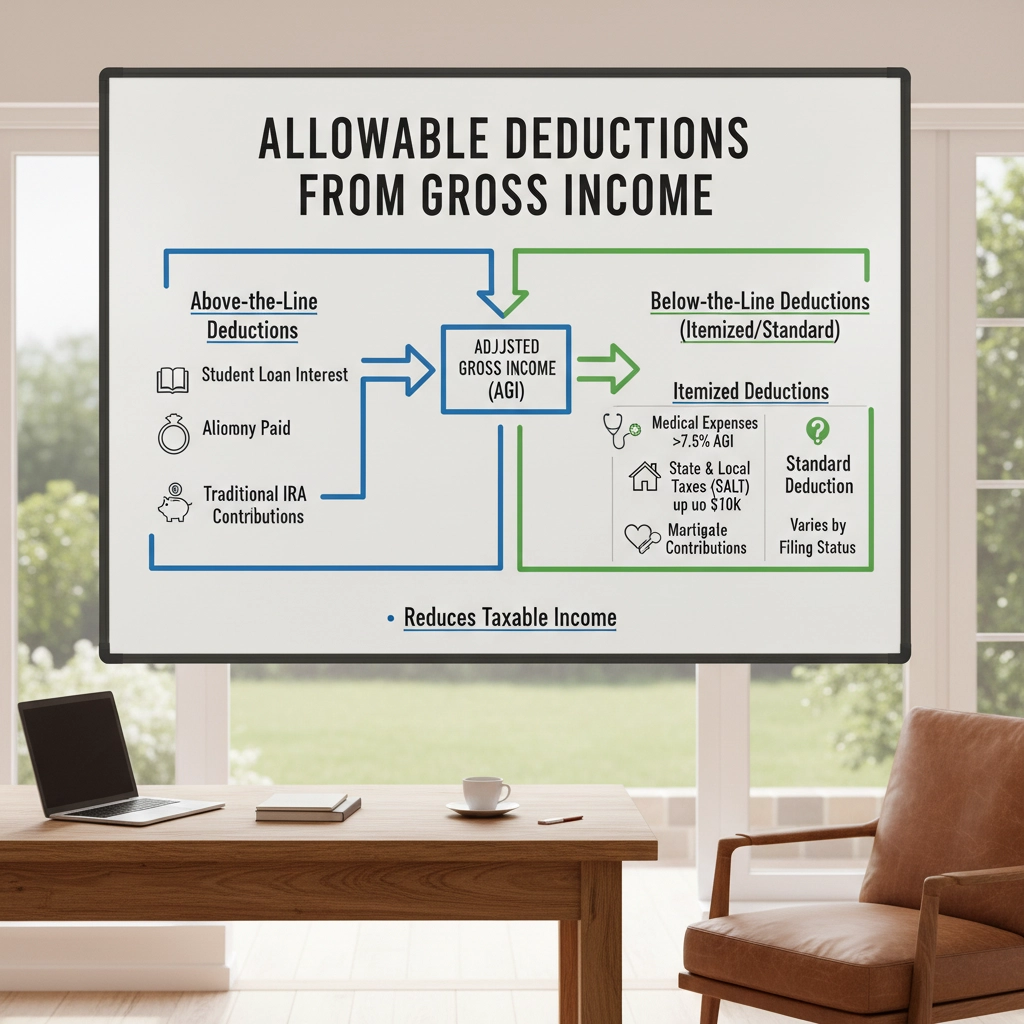
After determining gross income, certain deductions and adjustments are typically allowed to arrive at adjusted gross income. Common deductions include taxes (federal, state, and local), mandatory retirement contributions, union dues, and health insurance premiums paid for the benefit of the parent. Additionally, payments for support of other children (from a previous relationship) may also be deductible. The specific deductions allowed can vary depending on the jurisdiction, so it’s important to consult the applicable child support guidelines. Once all allowable deductions are subtracted from gross income, the resulting figure is the adjusted gross income, which is a key component in the child support calculation formula. Accurate documentation is crucial when claiming deductions, as courts will require proof of payment for each item. Failure to provide sufficient documentation can result in the disallowance of the deduction, potentially increasing the child support obligation.


Applying Child Support Guidelines
Most jurisdictions use a specific formula or set of guidelines to calculate child support. These guidelines typically consider the adjusted gross income of both parents, the number of children, and the amount of time each parent spends with the children. The most common models are the income shares model, the percentage of income model, and the Melson formula. The income shares model, used by many states, calculates child support based on the premise that children should receive the same proportion of parental income as if the parents lived together. This model combines the adjusted gross incomes of both parents and determines the total child support obligation based on state-specific tables or charts. Each parent then contributes to the total obligation in proportion to their share of the combined income. The percentage of income model, on the other hand, calculates child support as a percentage of the non-custodial parent’s income, with the percentage varying based on the number of children. The Melson formula is a more complex model that considers the basic needs of each parent and child before allocating additional income.


Common reasons for modifying child support orders include a change in either parent's income
Considering Deviations from Guidelines
While child support guidelines provide a framework for calculating support, courts have the discretion to deviate from these guidelines in certain circumstances. Deviations may be warranted when applying the guidelines would result in an unjust or inappropriate outcome. Common reasons for deviation include extraordinary medical expenses for the child, special educational needs, significant travel expenses for visitation, or the child’s independent financial resources. A parent seeking a deviation from the guidelines must present compelling evidence to support their request. The court will consider the best interests of the child when deciding whether to grant a deviation. For example, if a child has a chronic medical condition requiring ongoing treatment, the court may increase the child support obligation to cover these expenses. Similarly, if one parent incurs significant travel costs to exercise visitation rights, the court may adjust the support amount to offset these costs. The burden of proof rests on the party seeking the deviation to demonstrate that it is justified and in the child’s best interest.
Expenses Beyond Basic Support
In addition to basic child support, which covers the child’s essential needs such as housing, food, and clothing, there are often additional expenses that must be addressed. These may include medical expenses, childcare costs, and educational expenses. Many child support orders include provisions for sharing these additional expenses between the parents, typically in proportion to their respective incomes. Medical expenses not covered by insurance, such as co-pays, deductibles, and orthodontia, are often split between the parents. Childcare expenses incurred due to either parent’s employment or job search are also commonly shared. The treatment of educational expenses, such as private school tuition or college costs, can vary depending on the jurisdiction and the specific circumstances of the case. Some courts may order parents to contribute to these expenses, while others may not. It’s essential to clearly define how these additional expenses will be handled in the child support order to avoid future disputes.
Modifying Child Support Orders
Child support orders are not set in stone and can be modified if there is a substantial change in circumstances. A substantial change typically involves a significant increase or decrease in either parent’s income, a change in the child’s needs, or a change in the custody arrangement. To modify a child support order, a parent must file a motion with the court and provide evidence of the changed circumstances. The court will then review the current order and the new evidence to determine whether a modification is warranted. For example, if a parent loses their job and experiences a significant decrease in income, they may be eligible for a downward modification of their child support obligation. Conversely, if a parent receives a substantial raise or promotion, the other parent may seek an upward modification. The modification process can vary depending on the jurisdiction, but it generally involves filing the appropriate paperwork, providing financial documentation, and attending a court hearing.
Enforcement of Child Support Orders
Ensuring that child support orders are enforced is critical to providing for the child’s financial well-being. When a parent fails to pay child support as ordered, there are several enforcement mechanisms available. These may include wage garnishment, suspension of driver’s licenses or professional licenses, interception of tax refunds, and even jail time in cases of willful non-payment. The specific enforcement methods available can vary depending on the jurisdiction. If a parent is struggling to pay child support due to financial hardship, it’s important to communicate with the other parent and the court as soon as possible. Ignoring the problem can lead to more severe consequences. In some cases, a temporary modification of the support order may be possible while the parent addresses their financial difficulties. However, it’s essential to take proactive steps to address the situation and avoid falling further behind on payments. Post-divorce modifications and enforcement
Seeking Legal Assistance
Navigating the complexities of child support calculations and legal proceedings can be challenging, especially when dealing with complex income situations, potential deviations, or enforcement issues. Seeking legal assistance from an experienced family law attorney can provide invaluable guidance and support. An attorney can help you understand your rights and obligations, gather and present relevant financial information, negotiate with the other parent, and represent you in court. Additionally, an attorney can help ensure that the child support order is fair, enforceable, and in the best interests of the child. Investing in legal assistance can save you time, money, and stress in the long run, and can help ensure a positive outcome for your child.
The Importance of Accuracy and Transparency
Throughout the child support process, accuracy and transparency are paramount. Providing accurate and complete financial information is essential for calculating a fair and appropriate support amount. Intentionally misrepresenting income or expenses can have serious consequences, including legal penalties and a loss of credibility with the court. It’s also important to be transparent with the other parent and the court about any changes in circumstances that may affect the child support obligation. Open communication and a willingness to cooperate can help avoid disputes and ensure that the child’s needs are met. By prioritizing accuracy and transparency, parents can work together to create a child support arrangement that is fair, sustainable, and in the best interests of their child.
Conclusion: Ensuring Fair and Adequate Support
Calculating child support involves a multifaceted process that considers income, expenses, and various factors that can influence the final support amount. Understanding the nuances of these calculations, along with the potential for deviations and modifications, is crucial for ensuring that children receive fair and adequate financial support. By approaching the process with accuracy, transparency, and a focus on the child’s best interests, parents can navigate this challenging aspect of family law effectively. Seeking legal guidance when needed can further empower individuals to make informed decisions and protect their rights and their children’s well-being. The ultimate goal is to establish a child support arrangement that promotes the child’s financial stability and overall well-being, fostering a positive future for the child despite the separation of their parents.