



Public Interest Litigation (PIL) is a powerful tool that allows individuals or organizations to bring matters of public concern before the courts. It serves as a mechanism to address injustices, protect fundamental rights, and ensure accountability from the government and other public authorities. Understanding the process of filing a PIL is crucial for those seeking to advocate for the greater good and uphold the principles of justice and equity. This guide provides a step-by-step overview of how to file a PIL, ensuring that you are well-equipped to navigate the legal landscape and effectively present your case.


Understanding Public Interest Litigation
Public Interest Litigation (PIL) is litigation undertaken to secure public interest and demonstrates the availability of justice to socially deprived parties. It is an exception to the traditional rule of *locus standi*, which requires a person to have a direct personal interest in order to bring a case before the court. PIL allows any public-spirited individual or organization to approach the court on behalf of those who are unable to do so themselves, provided that the matter involves a genuine public cause. The concept of PIL originated in the United States in the 1960s and gained prominence in India in the 1980s, largely due to the efforts of Justice P.N. Bhagwati. It has since become an integral part of the Indian legal system, addressing a wide range of issues such as environmental protection, human rights violations, consumer protection, and corruption. PIL serves as a vital instrument for ensuring that the state and its agencies act in accordance with the law and for promoting social justice. The courts have recognized the importance of PIL in promoting good governance and have adopted a liberal approach in entertaining such petitions, provided they are filed with genuine intentions and raise issues of significant public concern.
Identifying a Genuine Public Cause
The first and most important step in filing a PIL is identifying a genuine public cause that warrants judicial intervention. A public cause is an issue that affects the rights, interests, or welfare of a significant section of the public. It could be related to environmental pollution, violation of human rights, corruption, or any other matter that has a broad impact on society. It is essential to distinguish between a genuine public cause and a private grievance. A PIL should not be used to settle personal scores or to promote private interests. The issue raised in the PIL must be of significant public importance and should not be trivial or frivolous. Before proceeding with the filing of a PIL, it is advisable to conduct thorough research to understand the scope and impact of the issue. Gather relevant data, reports, and other evidence to support your claim. Consult with experts or organizations working in the relevant field to gain a better understanding of the problem and potential solutions. This will help you to build a strong case and increase the chances of success. It is also important to consider whether the issue can be effectively addressed through other means, such as approaching the relevant government authorities or raising awareness through public campaigns. A PIL should be filed only when all other options have been exhausted or are unlikely to provide a satisfactory resolution.

Gathering Evidence and Information
Once you have identified a genuine public cause, the next step is to gather evidence and information to support your case. The strength of your PIL will depend on the quality and quantity of evidence you can provide to the court. This may include documents, photographs, videos, reports, and expert opinions. It is important to ensure that all evidence is authentic and reliable. Obtain certified copies of documents whenever possible and verify the accuracy of any information you rely upon. Conduct thorough research to gather relevant data and statistics that demonstrate the scope and impact of the issue. Consult with experts in the relevant field to obtain their opinions and insights. Their expertise can add credibility to your case and help the court to understand the technical aspects of the issue. If the issue involves environmental pollution, for example, you may need to collect water or air samples and have them tested by a certified laboratory. If it involves human rights violations, you may need to gather testimonies from victims and witnesses. Be prepared to present your evidence in a clear and organized manner. Create a timeline of events, highlighting the key incidents and their impact on the public. Use charts, graphs, and other visual aids to present data in an easily understandable format. The more compelling and well-documented your evidence, the greater the chances of convincing the court to take action.
Drafting the PIL Petition
Drafting the PIL petition is a crucial step that requires careful attention to detail and a thorough understanding of legal principles. The petition should be clear, concise, and well-structured, presenting the facts of the case in a logical and persuasive manner. The petition should begin with a brief introduction to the issue, explaining its significance and impact on the public. Clearly state the reliefs sought from the court, specifying the actions you want the court to take to address the problem. The petition should include the following elements: the name and address of the petitioner (the person or organization filing the PIL), the name and address of the respondent (the government authority or other entity against whom the PIL is filed), a statement of facts, outlining the relevant events and circumstances, the legal grounds for the petition, citing the relevant laws and constitutional provisions, the reliefs sought, specifying the actions you want the court to take, and an affidavit, verifying the accuracy of the information provided in the petition. It is important to draft the petition in a respectful and professional tone, avoiding any inflammatory language or personal attacks. Focus on the facts and the legal arguments, presenting your case in a clear and objective manner. Seek the assistance of a lawyer experienced in PIL matters to ensure that your petition is well-drafted and complies with all the necessary legal requirements. A well-drafted petition can significantly increase the chances of your PIL being admitted by the court. Drafting a PIL petition requires understanding of legal principles.


Filing the PIL in the Appropriate Court
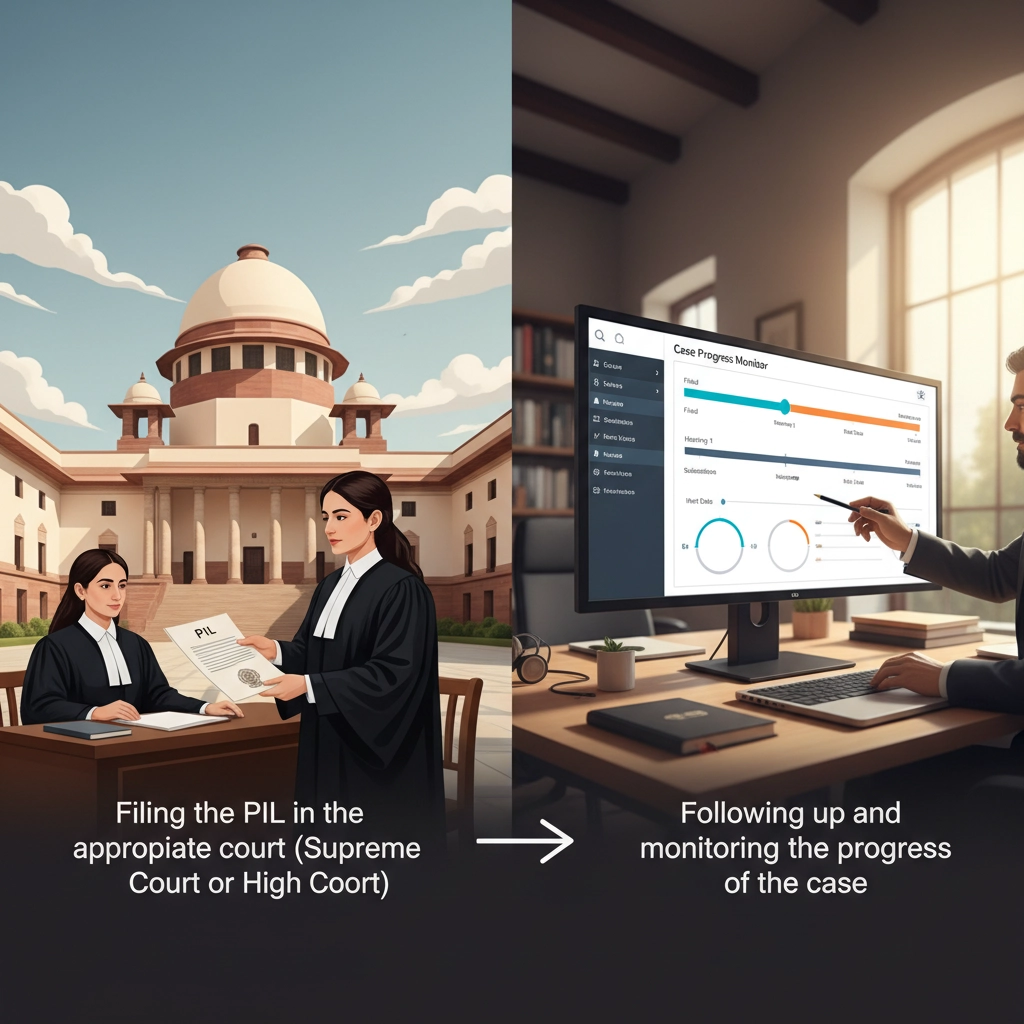
The next step is to file the PIL in the appropriate court. In India, PILs can be filed in the Supreme Court or the High Courts. The choice of court depends on the nature of the issue and the geographical jurisdiction. If the issue involves a violation of fundamental rights guaranteed by the Constitution, you can file a PIL directly in the Supreme Court under Article 32. If the issue involves a matter that falls within the jurisdiction of a particular state, you can file a PIL in the High Court of that state under Article 226. Before filing the PIL, it is advisable to consult with a lawyer to determine the appropriate court and to ensure that your petition complies with the court’s rules and procedures. The filing process typically involves submitting the petition along with the necessary documents and paying the required court fees. The court will then examine the petition to determine whether it raises a genuine public cause and whether it is maintainable under the law. If the court is satisfied that the petition is meritorious, it will issue notice to the respondent, directing them to file a response. The court may also issue interim orders to protect the public interest pending the final hearing of the case. It is important to follow up with the court to ensure that your PIL is being processed in a timely manner. Attend all hearings and be prepared to present your case effectively.
Following Up and Monitoring the Case
After filing the PIL, it is important to follow up and monitor the case closely. Attend all hearings and be prepared to present your case effectively. Keep track of all court orders and deadlines, and ensure that you comply with them in a timely manner. If the respondent fails to file a response or comply with the court’s orders, bring this to the attention of the court. The court may take action against the respondent for non-compliance. Monitor the implementation of any orders passed by the court. If the orders are not being implemented effectively, bring this to the attention of the court. The court may issue further directions to ensure that its orders are being complied with. It is also important to keep the public informed about the progress of the case. Publish updates on social media, issue press releases, and organize public awareness campaigns to generate support for your cause. The more public awareness you can generate, the greater the chances of achieving a positive outcome. Following up the PIL case requires sustained effort and commitment. Be prepared to invest the time and resources necessary to see the case through to its conclusion. Even if you do not achieve immediate success, your efforts can help to raise awareness about the issue and pave the way for future progress.
Filing a PIL can be a complex and challenging process, but it is also a powerful way to advocate for the public interest and promote social justice. By understanding the steps involved and seeking the assistance of experienced legal professionals, you can effectively navigate the legal landscape and make a meaningful difference in the lives of others. Remember that a successful PIL requires a genuine public cause, thorough research, compelling evidence, and a well-drafted petition. By following these guidelines and remaining committed to your cause, you can increase the chances of achieving a positive outcome and contributing to a more just and equitable society.